
Introduction
Corporate catering is more than just providing food—it’s a reflection of your brand, professionalism, and attention to detail. Whether you’re hosting a boardroom meeting, a client pitch, or a large corporate event, the right catering strategy can elevate the entire experience and leave a lasting impression.
Understanding Client Expectations
Before planning the menu or selecting a vendor, it’s crucial to understand what your clients truly value.
Key Factors to Consider
- Dietary preferences and restrictions (vegan, gluten-free, halal, etc.)
- Cultural sensitivities for diverse teams
- Event format (formal meeting, casual networking, or large conference)
- Timing and schedule alignment
Tailoring your catering choices based on these factors ensures inclusivity and professionalism.
Crafting a Memorable Menu
A well-thought-out menu can set the tone for your entire event.
Smart Menu Strategies
- Balance variety and simplicity: Offer enough options without overwhelming guests
- Use seasonal ingredients for freshness and cost efficiency
- Include healthy choices like salads, grilled items, and low-sugar beverages
- Add a signature dish that aligns with your brand identity
Popular Corporate Catering Formats
- Buffet-style for large gatherings
- Plated meals for formal events
- Boxed lunches for convenience
- Interactive food stations for engagement
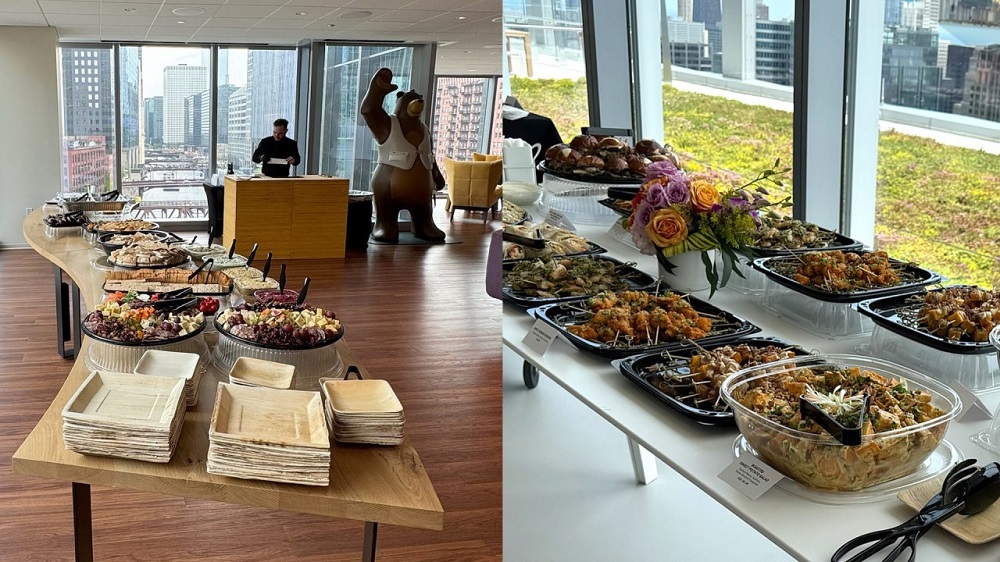
Presentation Matters More Than You Think
Even the best food can fall flat without appealing presentation.
Elevate Visual Appeal
- Use minimalist and elegant plating
- Incorporate brand colors subtly into décor or table settings
- Ensure clean and organized layouts
- Use eco-friendly and premium serving ware
First impressions are often visual—make them count.
Partnering with the Right Catering Service
Choosing the right caterer can make or break your event.
What to Look For
- Proven experience in corporate events
- Flexibility in menu customization
- Strong hygiene and safety standards
- Reliable logistics and punctual delivery
Pro Tip
Always request a tasting session before finalizing your vendor. It helps you assess both quality and presentation.
Timing and Logistics: The Silent Heroes
Flawless execution depends heavily on timing and coordination.
Best Practices
- Schedule food service around key agenda moments
- Avoid delays that disrupt presentations or meetings
- Ensure adequate staff for serving and cleanup
- Plan backup options for unexpected issues
Efficient logistics create a seamless experience that guests may not notice—but will definitely appreciate.
Personalization for a Lasting Impact
Clients remember thoughtful touches.
Ideas to Impress
- Customized menu cards with client branding
- Personalized dessert items or packaging
- Themed catering aligned with the event purpose
- Welcome drinks named after the company or project
Small details often create the biggest impressions.
Sustainability and Ethical Choices
Modern clients value environmentally responsible practices.
Sustainable Catering Tips
- Use locally sourced ingredients
- Minimize food waste with accurate portion planning
- Opt for biodegradable or reusable packaging
- Partner with caterers who follow ethical sourcing
This not only enhances your brand image but also aligns with global sustainability goals.
Leveraging Technology in Catering
Technology can streamline and enhance your catering experience.
Useful Tools
- Digital RSVP systems to estimate headcount
- Catering management software for coordination
- QR-based menus for contactless access
- Feedback forms for post-event improvement
Integrating tech ensures efficiency and modern appeal.
Measuring Success and Gathering Feedback
Every event is an opportunity to improve.
Post-Event Evaluation
- Collect feedback from attendees
- Analyze food consumption patterns
- Evaluate vendor performance
- Identify areas for improvement
Continuous refinement helps you consistently impress clients.
Conclusion
Corporate catering is a strategic element of business hospitality. By focusing on personalization, presentation, quality, and sustainability, you can transform a simple meal into a powerful experience. The right approach not only satisfies appetites but also strengthens relationships and reinforces your professional image.
FAQs
1. What is the most important factor in corporate catering?
Understanding client preferences and aligning the catering with the event’s purpose is the most critical factor.
2. How far in advance should corporate catering be planned?
Ideally, you should plan at least 1–2 weeks in advance, or longer for large events.
3. How can I accommodate dietary restrictions effectively?
Offer diverse menu options and clearly label all food items to ensure inclusivity.
4. Is buffet or plated service better for corporate events?
It depends on the event type—buffets work well for networking, while plated meals suit formal settings.
5. How can catering reflect my company’s brand?
Through customized menus, branded packaging, and themed presentations aligned with your identity.
6. What are cost-effective catering strategies?
Use seasonal ingredients, simplify menus, and choose service styles like boxed meals for smaller events.
7. How do I ensure food quality at large events?
Work with experienced caterers, conduct tastings, and ensure proper food handling and storage practices.
