
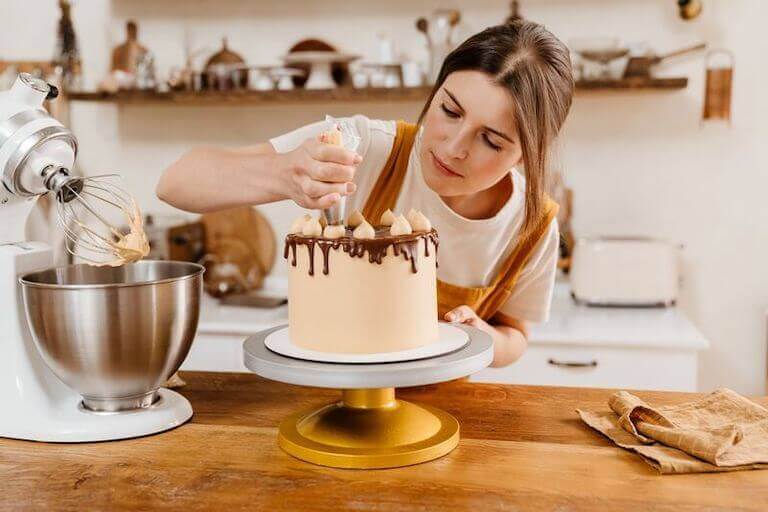
Why Presentation Matters in Cake Decorating
A beautifully decorated cake does more than satisfy a sweet tooth—it creates a memorable experience. Whether you’re baking for a birthday, wedding, or casual gathering, thoughtful decoration can transform a simple cake into a centerpiece. The good news? You don’t need to be a professional pastry chef to achieve stunning results.
Start with a Smooth Base
Before adding decorations, ensure your cake has a clean, polished surface.
- Apply a crumb coat to trap loose crumbs
- Chill the cake before final frosting
- Use a bench scraper or offset spatula for smooth edges
A flawless base instantly makes your cake look more professional.
Choose the Right Tools
Having the right tools simplifies the decorating process and improves results.
- Piping bags and tips for detailed designs
- Turntable for even frosting
- Offset spatula for smooth spreading
- Cake combs for textured finishes
Investing in a few essentials can dramatically elevate your designs.
Master Basic Piping Techniques
Piping is one of the easiest ways to add elegance.
- Start with simple patterns like rosettes and shells
- Maintain consistent pressure for uniform shapes
- Practice on parchment paper before decorating
Even basic piping can look impressive when done neatly.
Use Color Strategically
Color plays a powerful role in visual appeal.
- Stick to a limited palette (2–3 colors) for a clean look
- Use gel food colors for vibrant shades
- Blend colors for an ombré or watercolor effect
Avoid overloading your cake with too many contrasting colors.
Add Texture and Layers
Texture adds depth and sophistication.
- Use a palette knife for artistic strokes
- Try a semi-naked cake for a rustic feel
- Incorporate layers like ganache drips or crumb coatings
Textures create visual interest without needing complex designs.
Decorate with Fresh and Edible Elements
Natural and edible decorations bring elegance effortlessly.
- Fresh fruits like berries or citrus slices
- Edible flowers (ensure they are safe for consumption)
- Chocolate shards or curls
- Edible gold leaf for a luxurious touch
These additions enhance both taste and appearance.
Focus on Balance and Composition
A well-designed cake isn’t overcrowded.
- Leave some negative space for a clean look
- Keep decorations evenly distributed
- Highlight one focal point instead of multiple competing elements
Less is often more when it comes to sophisticated designs.
Pay Attention to Finishing Details
Small touches can make a big difference.
- Clean the cake board edges
- Use a warm spatula for a final smooth finish
- Add a subtle shine with glaze or syrup
These final steps give your cake a polished, bakery-quality appearance.
Practice Consistency and Patience
Cake decorating improves with repetition.
- Practice regularly to refine techniques
- Don’t rush the process—precision takes time
- Learn from mistakes and experiment with styles
Consistency is what separates average designs from exceptional ones.
Frequently Asked Questions (FAQs)
1. What is the easiest way to make a cake look professional?
Start with a smooth frosting base and add simple piping or fresh decorations like fruits or flowers.
2. How do I prevent crumbs from ruining my frosting?
Apply a crumb coat and chill the cake before adding the final layer of frosting.
3. Which frosting is best for decorating?
Buttercream is the most versatile and beginner-friendly option for decorating cakes.
4. How can I improve my piping skills quickly?
Practice basic patterns on parchment paper and maintain steady pressure while piping.
5. Can beginners create elegant cake designs?
Yes, even simple techniques like smooth frosting, minimal colors, and neat piping can create elegant results.
6. What colors work best for cake decorating?
A limited palette of 2–3 complementary colors usually looks more refined than using many colors.
7. How do I make my cake decorations stand out?
Use contrast, texture, and a clear focal point to draw attention to your design.
