
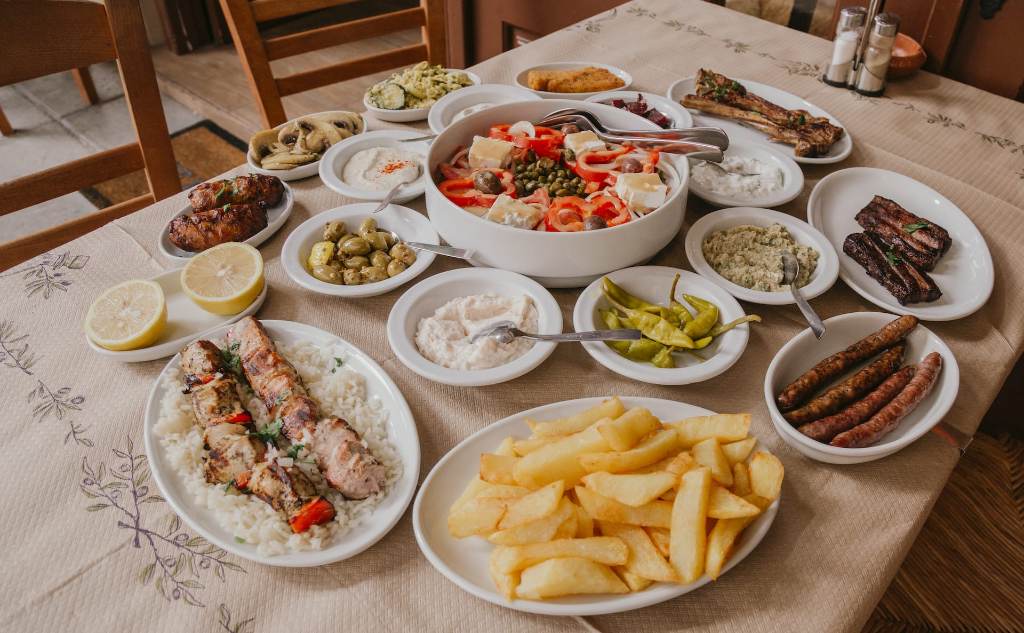
Cyprus may be known for its beaches and ancient ruins, but for many travelers, the real discovery happens at the dining table. The island’s cuisine is a rich blend of Greek, Turkish, and Middle Eastern influences, shaped by centuries of trade and cultural exchange. Fresh herbs, olive oil, slow-cooked meats, handmade cheeses, and seasonal vegetables define everyday cooking here.
Exploring the Top 10 Cyprus Dishes offers more than just a list of meals. It reveals a culture built around sharing food, honoring tradition, and celebrating bold yet balanced flavors.
Souvla
Few dishes capture the spirit of Cyprus quite like souvla. Large cuts of pork or lamb are skewered and slowly roasted over charcoal, usually outdoors. The cooking process is unhurried, allowing the meat to develop a smoky crust while remaining tender inside. Souvla is often prepared for Sunday gatherings and celebrations, where family and friends gather around the grill long before the meal is ready.
Halloumi
Halloumi is Cyprus’s most famous culinary export. This semi-hard cheese, traditionally made from sheep’s and goat’s milk, has a unique ability to hold its shape when grilled or fried. Once heated, it develops a golden exterior while remaining pleasantly firm. Served with fresh tomatoes, olives, or even watermelon in summer, halloumi reflects the island’s love of simple, high-quality ingredients.
Kleftiko
Kleftiko is a slow-cooked lamb dish that speaks to patience and tradition. The meat is typically seasoned with garlic, oregano, and lemon before being sealed and baked for hours. The result is lamb so tender it falls apart with minimal effort. The long cooking time allows the flavors to deepen, creating a dish that feels both rustic and refined.
Sheftalia
Sheftalia offers a more casual but equally authentic taste of Cyprus. These small sausages are made from minced pork or lamb mixed with herbs and onions, then wrapped in caul fat before grilling. Often served in warm pita bread with fresh salad and a squeeze of lemon, sheftalia is a favorite street food that locals enjoy year-round.
Koupepia
Koupepia, also known as stuffed vine leaves, is a dish deeply rooted in home cooking. Vine leaves are filled with a mixture of rice, minced meat, tomatoes, and aromatic herbs before being gently simmered. The preparation is often a shared family activity, with multiple generations participating in the rolling and filling process.
Stifado
Stifado is a hearty stew that showcases the island’s ability to balance sweetness and richness. Beef or rabbit is slow-cooked with small onions, red wine, tomatoes, and warming spices such as cinnamon. The onions soften into the sauce, adding depth and subtle sweetness that complements the tender meat.
Tava
Tava is a comforting oven-baked dish typically prepared with lamb, rice, tomatoes, and cumin. Everything cooks together in a clay dish, allowing the ingredients to absorb each other’s flavors. The result is a cohesive, aromatic meal that feels especially satisfying during cooler evenings.
Afelia
Afelia highlights the distinctive use of coriander in Cypriot cooking. Pork is marinated in red wine and crushed coriander seeds before being slowly cooked until tender. The marinade infuses the meat with warmth and fragrance, creating a dish that pairs beautifully with bulgur or rustic bread.
Loukoumades
For those with a sweet tooth, loukoumades are a must-try. These small, fried dough balls are soaked in honey or syrup and sprinkled with cinnamon. Crisp on the outside and soft inside, they are often enjoyed during festivals and special gatherings.
Baklava
Baklava holds a firm place in Cypriot dessert culture. Thin layers of pastry are filled with chopped nuts and sweet syrup, resulting in a rich yet delicate treat. Though small in portion, baklava leaves a lasting impression with its texture and flavor.
Where to Experience These Dishes in Cyprus
While traditional tavernas across Cyprus’s villages and coastal towns remain central to experiencing authentic local cuisine, many visitors also find that tastes of these beloved dishes are woven into the dining options of quality hotels. At places like the Cap St Georges Hotel & Resort, for example, guests can enjoy thoughtfully prepared Mediterranean-inspired meals that are influenced by the island’s culinary heritage, offering a convenient way to explore local flavors during their stay. For readers interested in learning more about the cultural background and preparation of these traditional meals, this detailed guide to Golden Bay’s dining and bars provides additional perspective on how regional recipes have shaped contemporary Cypriot cuisine.
